The Age of the AI Explosion

Orchestrating AI across vendors —
with governance built in.

Tony Ng is a Hong Kong-based AI specialist, multi-agent systems architect, and former CTO. He combines the best of every vendor — n8n, OpenClaw (local), Perplexity Computer, MaxClaw and MaxHermes from MiniMax, and US-hosted VM infrastructure — into a single, governed multi-agent fabric. The hard part isn't using AI to build apps; it's managing AI agents across platforms with the controls real teams need.

HK / Greater Bay Area · EN · 廣東話 · 普通話 · 30+ yrs · software & large-scale delivery
vendors_orchestrated
06platforms
agents_in_fleet
14specialists
microservices_shipped
100+in prod
governance_layer
onaudit · policy · egress

// THE STACK TONY ORCHESTRATES

  • n8n
  • OpenClaw
  • Perplexity
  • MiniMax
  • Tailscale
  • Docker
  • OpenShift
  • Postgres
  • NATS

// The Real Problem

The focus isn’t using AI to build apps. It’s governing AI agents across vendors.

Tony runs a working multi-vendor AI fabric — every platform contributing what it does best, all of it under one operational control plane. Identity, secrets, audit, and policy don’t end at a vendor’s boundary; they follow the workload.

// architecture.svg read-only v1.4 · 2026.05
ON-PREM · HK CLOUD · US / GLOBAL Web · WhatsApp · API ingress · mTLS n8n · workflow glue cron · webhooks Email · Telegram ingress · redacted // CONTROL PLANE · governance & routing Tony Ng · the orchestrator scoped tokens · policy gates · audit log · read-only ops view JWT per agent · per task · per vendor OpenClaw · multi-agent runtime Architect · Designer · Dev · QC · Operator · PA KBMesh · on-prem KB pgvector · LightRAG · Presidio egress Local LLMs · Ollama Qwen · Llama · air-gapped inference Perplexity Computer research · deliverable gen · cross-app actions MaxClaw & MaxHermes · MiniMax specialist agents · model-tier routing VM Server · US edge endpoints · isolated workloads EGRESS LAYER Presidio · PII / PHI / PCI redaction · WORM audit log · per-channel policy JSON · mTLS scoped JWT · NATS scoped JWT · HTTPS all egress audited
fig 01 One control plane. Many vendors. Every workload audited and policy-gated end-to-end.
Workflow Glue

n8n

Event triggers, schedules, and the long tail of integrations that wire everything else together.

Local Multi-Agent Runtime

OpenClaw on-prem

Self-hosted agent team — Architect, Designer, Developer, QC, Operator, PA — running where the data lives.

Cloud Reasoning & Research

Perplexity Computer

Heavy lifting on web research, deliverable generation, and cross-app actions when the cloud is the right place.

Specialist Agents · MiniMax

MaxClaw & MaxHermes

MiniMax-powered agents brought in for specific roles where their model strengths and economics win.

Edge & Compute

VM Server US

Geo-distributed VM infrastructure for low-latency endpoints, isolated workloads, and jurisdictional reach.

Governance & Control

Tony Ng · the orchestrator

One control plane: scoped tokens, audit log, policy gates, kill-switches, and a read-only operational view for humans.

// Governance · mechanisms, not slogans

01

Identity & scoped access

JWT per agent, per vendor, per task — enforced at the orchestrator.

RBAC.yaml
role: developer-agent
runtime: openclaw.local
scope:
  read:  [git/blueprints, kb/source]
  write: [git/branches/dev-*]
  deny:  [prod/*, secrets/*]
ttl: 3600  # JWT exp · rotated per task
02

Audit everywhere

Every prompt, artifact, and handoff captured — WORM storage.

audit.log
// audit/2026-05-07.jsonl · append-only · SHA-256 chained
{"ts":"2026-05-07T03:48:21Z","task":"t-9f4a",
 "agent":"openclaw/dev#3","vendor":"local",
 "action":"prompt.in","hash":"a3f1…",
 "prev":"e2c9…","redacted":["PII.email"]}
03

Policy & egress redaction

PII / PHI / PCI / HK-regional fields filtered on the way out — per channel.

egress.policy
channel: cloud.perplexity
redact:
  - PII.{name,email,phone,hkid}
  - PHI.{patient_id,diagnosis}
  - PCI.card_number
  - SECRETS.\b[A-Z0-9]{32,}\b
on_match: replace  # never block, always log
04

Read-only control tower

Humans observe and intervene — they never rewrite history.

api.surface
// GateForge Admin Portal · strictly read-only by design
GET  /fleet/agents          // live heartbeats (SSE)
GET  /tasks/{id}/timeline   // replay + decisions
GET  /audit?from=&to=       // signed log query
POST /tasks/{id}/intervene  // pause / kill only
Tony Ng — Hong Kong-based AI specialist and multi-agent systems architect

// About

Builder. Architect. Orchestrator.

Tony has been writing software since before the cloud had a name — .NET, Java, TypeScript, Linux, microservices, you name it. He led engineering at a ~100-person software company, ran healthcare systems for Hong Kong's private hospitals, and shipped 100+ microservices across OpenShift in production.

Today he runs R&D and innovation at the edge of the AI Explosion — turning multi-agent systems, agentic SDLC, and on-premise AI into products that ship. He prototypes hard, documents harder, and cares deeply about security, sovereignty, and the practical economics of AI in regulated industries.

Three decades of building software and steering large-scale project delivery — from .NET and Java in the early years to TypeScript, microservices, and multi-agent architectures today.

  • 30+yrs · software & large-scale delivery
  • 100+microservices in production
  • 10AI projects in flight
  • 3languages: EN · 粵 · 普

// Live demo

How GateForge Loom moves a task.

A request enters the orchestrator, gets planned by Brain, recalls context from Memory, executes through Hands, and writes its trace back. Click any node to see what it owns — or watch the workflow run end-to-end.

01Ingest 02Plan 03Recall 04Execute 05Persist
plan.req recall.ctx exec.cmd trace.put BRAIN claude decides · plans MEMORY hermes recall · persist ORCHESTRATOR n8n HANDS openclaw acts · executes // task.in

// API playground

Send a task. Watch Loom orchestrate it.

Type a prompt or pick a preset. The simulated GateForge Loom stack streams back live agent messages — Brain plans, Memory recalls, Hands execute, the orchestrator finalises. JSON contracts match the real Loom runtime; latency and shape are simulated client-side.

// try
POST /v1/loom/tasks
idle

Stream awaiting

Submit a task and the orchestrator will stream agent messages back in real time.

200 OK · Simulated. No data leaves your browser.

// Projects

What Tony is building right now

A working showcase of the platforms, frameworks, and internal tools he is actively designing, shipping, and operating in 2026. Multi-agent SDLC, on-premise knowledge, real-time collaboration, and the operational backbone that holds it all together.

✦ Spotlight

The orchestration layer — governing many agents, not just calling one.

Two projects sit at the center of Tony's current work: a composable open-source stack that proves the Brain · Hands · Memory pattern, and a vendor-neutral protocol that lets agents from different runtimes coordinate on the same task.

GateForge Loom workflow diagram — Brain, Hands, Memory agents connected to a central orchestrator hub through JSON contracts Public OSS · PoC

COMPOSABLE MULTI-AGENT STACK · OPEN SOURCE

GateForge Loom

Weave intelligent agents into workflows — Brain (Claude) · Hands (OpenClaw) · Memory (Hermes), wired via n8n on Docker.

A layered multi-agent system that enforces single-responsibility per layer. Brain decides, Hands act, Memory remembers — each its own Docker container, each exposing a small typed API, each upgradable independently. n8n orchestrates the loom; Redis carries job state; Postgres + pgvector keeps episodic and SOP memory.

  • Brain · Hands · Memory split — no prompt soup, every layer has one job
  • JSON contracts between agents, every run leaves a memory trace
  • Drop-in agents (Validator, Critic, Router, Reviewer…) as additional containers
  • Single-VM Docker Compose deployment, ready to scale to fan-out workflows
PythonFastAPIn8nPostgres + pgvector RedisDocker ComposeAnthropic
AI-AO vendor-neutral agent orchestration mesh visualization In Build

VENDOR-NEUTRAL ORCHESTRATION PROTOCOL

AI-AO · Agent Orchestration Framework

A vendor-neutral, methodology-neutral protocol for multi-agent coordination.

A common control plane that lets agents from different vendors — OpenClaw, Perplexity Computer, Manus, ChatGPT Agent — coordinate on the same task without being locked into one runtime. Event-driven, no polling, durable by design.

  • GitHub as the source of truth, NATS JetStream as the event bus
  • MinIO for shared artifacts, signed handoffs between agents
  • Pluggable adapters per agent runtime, scoped tokens per role
  • Vendor-portable — swap runtimes without rewriting workflows
NATS JetStreamMinIOGitHubShellDocker

⟶ The GateForge stack · multi-agent SDLC platform

Agentic SDLC methodology blueprint visualization Methodology · v1

AGENTIC SDLC METHODOLOGY

OpenClaw Guideline

An opinionated agentic SDLC playbook grounded in industry standards.

One repo, two topologies — multi-agent 5-VM hub-and-spoke for teams, single-agent for solo work — and one shared methodology. The agentic equivalent of a coding standard, written for AI teammates and human reviewers alike.

  • Anchored in IEEE 830, ISO 25010, C4, OWASP, IEEE 829, ISTQB, SRE, ITIL, SemVer
  • Same blueprints work for solo agents and multi-agent teams
  • Test-first, doc-first, evidence-first by default
OpenClawMarkdownC4OWASPShell
Read-only operational control tower visualization Production

CONTROL TOWER · TRUST LAYER

GateForge Admin Portal ⚡ AI-built

A read-only operational control tower for the agentic SDLC.

Mission Control for everything GateForge runs. Strictly read-only by design — observability, audit, and governance without giving the human operator a footgun.

  • Modules: Mission Control, Agent Fleet, Notifications, Dead Letter Queue, Blueprint Governance
  • Security & Secrets, Models & Routes, Setup, immutable Audit Log
  • Live agent heartbeats and event streams via SSE
Next.js 14ExpressSQLiteSSETypeScript

⟶ Knowledge & collaboration · how teams and agents share context

Secure on-premise knowledge mesh visualization Live

SECURE KNOWLEDGE MESH

KBMesh ⚡ AI-built

One mesh. Every agent. Zero leakage.

A secure, on-premise, AI-native knowledge base. Originals stay full-fidelity inside your VM — PII, payment data, credentials, and medical / Hong Kong-regional sensitive fields are redacted only on egress, per channel and per agent.

  • Multi-channel ingestion: WebUI, WhatsApp, Telegram, email, API
  • GraphRAG retrieval via LightRAG + pgvector, citation-grounded answers
  • MCP gateway so any agent runtime can read it through one contract
  • Microsoft Presidio redaction with PII / payment / credential / medical / HK regional packs
  • Local LLMs by default — Ollama with Qwen / Llama families
TypeScriptOllamaMCPNestJS pgvectorLightRAGPresidion8n
Real-time collaborative AI whiteboard visualization Production

REAL-TIME AI CANVAS

Collaborative AI Whiteboard ⚡ AI-built

A real-time canvas where AI agents join the team.

A production-grade collaborative whiteboard built on tldraw v3, with OpenClaw agents that participate directly on the canvas. 18 facilitation templates, 34 specialist shapes, dot voting, media embeds, and AI features wired to OpenRouter.

  • Templates: HMW, SWOT, Retros, PI Planning, OKR, Lean Canvas, and more
  • Diagram libraries: Flowchart, BPMN, ERD, Network, Wireframe
  • AI: Generate Stickies, Canvas Agent, Board Summary, Auto Layout, Text-to-Diagram, Smart Connect, Sticky Cluster
  • Real-time CRDT sync via Yjs + Hocuspocus, persistent state in PostgreSQL + Redis
tldraw v3React 18NestJS 10Hocuspocus PostgreSQLRedisOpenRouter
Personal second brain knowledge graph visualization Architecture Planning

PERSONAL KNOWLEDGE

Second Brain · Local KB ⚡ AI-built

A self-hosted, agent-readable Obsidian-class knowledge base.

Markdown on disk, CRDT sync across devices, and an API surface that lets OpenClaw and friends read, write, cite by file path, and mask sensitive data on the way out.

  • Yjs / Automerge cross-device sync
  • pgvector embeddings + metadata in Postgres
  • Source-cited responses with file path attribution
MarkdownYjspgvectorFastifyGitea
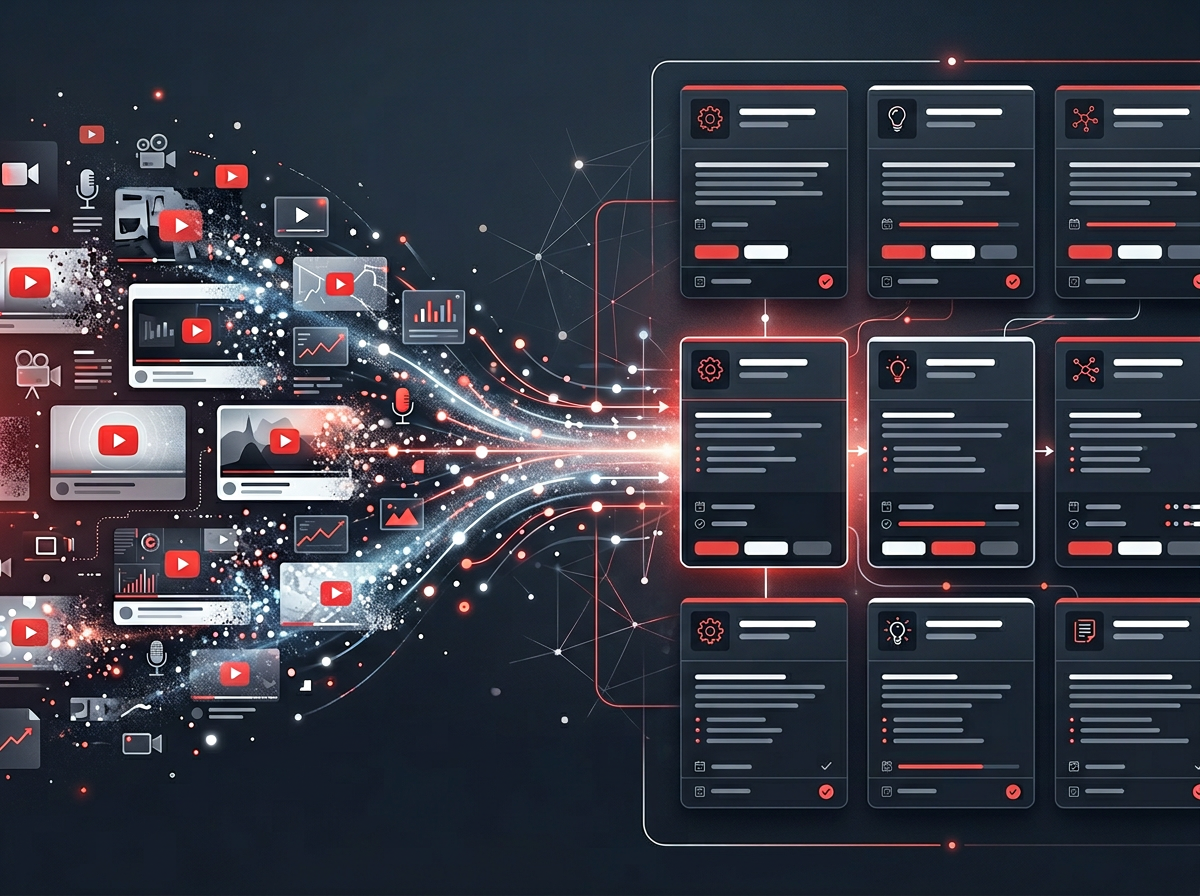
YouTube to Notion automation visualization Running Daily

CONTENT AUTOMATION

AI 超元域 · YouTube → Notion

A daily AI-content briefing system, on autopilot.

Monitors the AI 超元域 channel, classifies each video into 11 topic pages, summarises content and standout comments, and writes everything into a structured Notion database — every day, unattended.

  • 11 category pages, summary table, card / board / list views
  • Scheduled monitoring, ingest, and re-classification
  • Comment-mining for community insight signal
Notion APIn8nCron

⟶ Internal product tools · the systems his teams actually run on

Project management system visualization Production · v4.2

PROJECT MANAGEMENT

Project Management System ⚡ AI-built

An internal project management system tuned for multi-team delivery.

A pragmatic PMS for managing concurrent client projects — backlog, milestones, releases, team utilisation. Containerised end-to-end so any environment can spin up a fresh stack.

JavaScriptNode.jsMySQLnginxDocker
Bug reporting and triage tool visualization Production

QA · BUG TRIAGE

Bug Reporter ⚡ AI-built

A purpose-built bug reporting and triage tool.

A focused issue intake system that QA engineers, support, and product managers actually enjoy using — structured fields, attachments, status flow, and a clean reviewer view. Same Docker stack as the rest of the suite.

JavaScriptNode.jsMySQLnginxDocker
Revenue and expenses management tool visualization In Build

FINANCE OPS

Revenue & Expenses Manager ⚡ AI-built

A modern internal tool for tracking revenue and operating expenses.

A clean, fast, opinionated finance ops console — built with Vite + React + shadcn-ui + Tailwind on the front, an Express + MySQL service behind. Production-ready with nginx and Docker from day one.

TypeScriptViteshadcn-uiTailwindExpressMySQL

⟶ Operational backbone · what keeps everything alive

Lightweight VM health check service visualization Live

OBSERVABILITY

VM Health Check

A lightweight VM uptime & resource monitor with a clean live dashboard.

A small, sharp NestJS service that watches every VM in the fleet — uptime, CPU, memory, disk — and exposes both a JSON API and an HTML dashboard that auto-refreshes every 10 seconds. Boring, dependable, hard to live without.

  • REST API + zero-config HTML dashboard
  • 10-second auto-refresh, drop-in for any Linux VM fleet
  • TypeScript, low footprint, container-friendly
TypeScriptNestJSDockerLinux

Tailscale Mesh

Private SSH + API across home VMs and edge nodes. UFW restricted to Tailscale IP ranges.

Team Docker Images

Two Docker setups for running 6 OpenClaw agents — Architect, Designer, Developer, QC, Operator, PA.

n8n Automation

Workflow glue across KBMesh, messaging bridges, and digest pipelines.

INFRASTRUCTURE

The Backbone

The unglamorous systems that make everything above run reliably.

Tailscale, UFW, Docker Compose, multi-VM OpenClaw deployments, and n8n flows. This is where the headlines actually become production.

TailscaleUFWDockerLinuxn8nOpenClaw

// Stack

The toolkit behind the work

Languages

  • TypeScript / JavaScript
  • Java · .NET
  • SQL — MSSQL · MySQL · Postgres
  • Bash / Linux

AI & Agents

  • OpenClaw (multi-agent)
  • Claude · GPT · Gemini · MiniMax
  • MCP servers
  • pgvector · GraphRAG · LightRAG

Infrastructure

  • Docker · OpenShift
  • Tailscale · UFW
  • PostgreSQL · Redis · MinIO
  • n8n · Vercel

Domains

  • Healthcare systems (HK private hospitals)
  • Enterprise SDLC & QA
  • Microservices at scale
  • Security & data sovereignty

// Contact

Let's build for the AI Explosion era.

If you're navigating multi-agent SDLC, on-premise AI, or AI in regulated industries — especially in Hong Kong or the Greater Bay Area — Tony would love to talk.

tonylnng@gmail.com →